
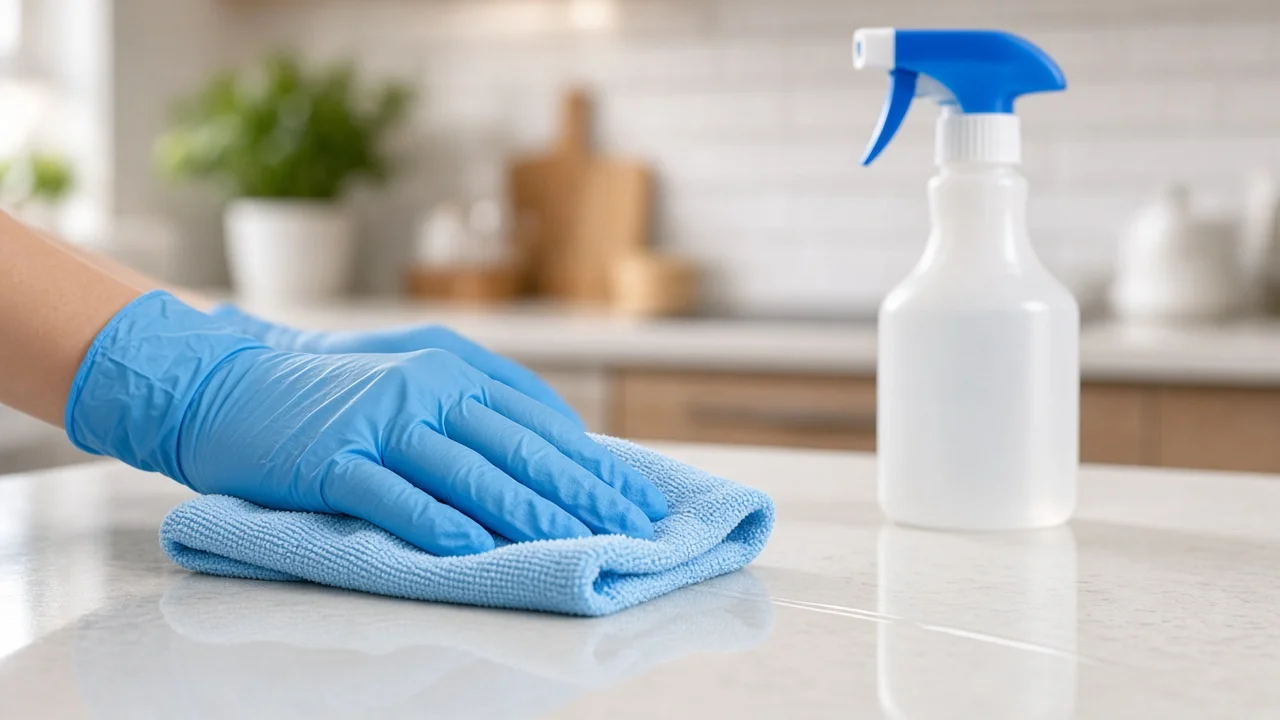
Have you ever wondered whether wiping a kitchen bench or cleaning your bathroom actually removes bacteria? The answer depends on what you mean by cleaning.
Regular cleaning is essential for removing dirt, grease, food residue and other contaminants from surfaces. However, cleaning and disinfecting are not the same thing. Understanding the difference can help you keep your home cleaner and more hygienic.
Does Cleaning Remove Bacteria?
Yes, cleaning can remove a significant amount of bacteria, germs and other microorganisms from surfaces. When you use water, detergent and physical action such as wiping or scrubbing, you remove dirt and contaminants from the surface.
However, cleaning does not necessarily kill every microorganism. Some bacteria may remain on a surface after ordinary cleaning.
This is why cleaning should be considered an important first step rather than a guarantee that a surface is completely free from bacteria.
Cleaning vs Sanitising vs Disinfecting
These terms are often used interchangeably, but they have different purposes.
Cleaning removes dirt, dust, grease, food particles and other visible or physical contaminants.
Sanitising reduces the number of microorganisms on a surface to a safer level when the appropriate product is used correctly.
Disinfecting is designed to destroy many harmful microorganisms on surfaces when an appropriate disinfectant is used according to its instructions.
For effective hygiene, surfaces should generally be cleaned first so that dirt and grease do not interfere with the sanitising or disinfecting process.
Which Areas Need Extra Attention?
Some parts of your home are more likely to collect bacteria and require regular cleaning.
Kitchen
Kitchen benches, sinks, taps, cupboard handles and appliance handles can collect food residue, grease and germs. Clean these surfaces regularly, particularly after preparing food.
Bathroom
Bathrooms can accumulate moisture, soap residue and microorganisms. Give extra attention to toilets, sinks, taps, shower areas, tiles and frequently touched surfaces.
High-Touch Surfaces
Don't forget surfaces that are touched frequently, including:
- Door handles
- Light switches
- Remote controls
- Tap handles
- Appliance buttons
- Cabinet handles
Regularly cleaning these areas can help maintain a more hygienic home.
How to Clean More Effectively
For better cleaning results, follow a few simple steps:
- Remove visible dirt and debris first.
- Use a suitable cleaning product for the surface.
- Follow the product's instructions carefully.
- Allow the recommended contact or dwell time when required.
- Use clean cloths or cleaning equipment to avoid spreading dirt.
- Allow surfaces to dry properly.
Never mix different cleaning chemicals unless the product instructions specifically say it is safe to do so.
Can Professional Cleaning Help?
Professional cleaning can be useful when your home needs more than routine maintenance. Experienced cleaners can help remove built-up dirt, grease, dust and other contaminants from areas that are often overlooked.
At Aussie Bond Clean Experts, our cleaning services are designed to help homeowners and renters maintain clean, fresh and well-maintained properties. We provide services including bond cleaning, general cleaning, spring cleaning, carpet cleaning and oven cleaning.
Keep Your Home Clean and Hygienic
Regular cleaning is an important part of maintaining a healthy and comfortable home. While cleaning removes dirt and many contaminants, sanitising or disinfecting may be appropriate when reducing microorganisms is specifically required.
The key is to use the right cleaning method and product for each surface and always follow product instructions.
Need help with a deep clean or bond clean on the Gold Coast? Contact Aussie Bond Clean Experts for a free quote and let our professional team take care of the hard work.
Speak with Aussie Bond Clean Experts
Phone:
0416 741 493
Email:
info@aussiebondcleanexperts.com.au